Java is Indonesia’s most populated island and its cultural, historical, and economic heartland. Home to the capital Jakarta, the ancient royal city of Yogyakarta, and some of the world’s most spectacular temples and volcanoes, Java offers an incredible diversity of experiences that rivals anything in Southeast Asia. This Java travel guide covers the island’s top destinations, visa requirements, practical travel tips, and how to make the most of your time here in 2026.
Indonesia Visa for Visiting Java
To visit Java (as part of Indonesia), most international travelers need the eVOA (B1) or an eVisa. Java’s main international entry point is Soekarno-Hatta International Airport (CGK) in Jakarta, though Yogyakarta’s YIA airport also receives some direct international flights.
Apply for your Indonesia eVisa online at molina.imigrasi.go.id at least 7 days before departure. The fee is IDR 500,000 (~$32 USD) for 30 days. For all visa options, see our Indonesia visa types guide.
Top Destinations on Java
Yogyakarta – The Cultural Capital
Yogyakarta (affectionately called “Jogja”) is Java’s must-visit city and one of Indonesia’s finest cultural destinations:
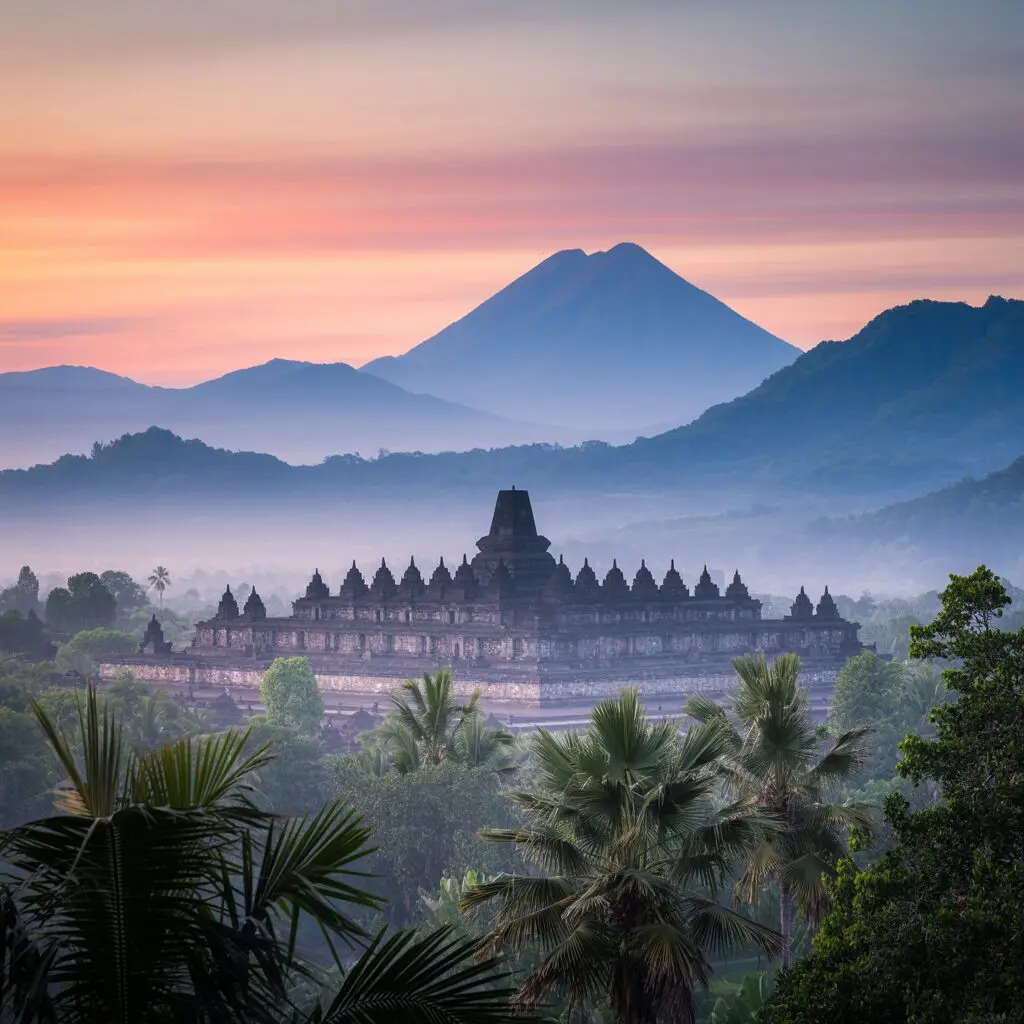
- Borobudur Temple: The world’s largest Buddhist monument, a 9th-century masterpiece and UNESCO World Heritage Site. Best visited at sunrise. Located 42 km from Yogyakarta.
- Prambanan Temple: A 9th-century Hindu temple compound dedicated to the Trimurti, also UNESCO listed. Beautiful at sunset, particularly with Ramayana ballet performances.
- Kraton (Sultan’s Palace): The still-active royal palace of Yogyakarta’s sultanate, a center of Javanese culture.
- Malioboro Street: Yogyakarta’s famous shopping street packed with batik, wayang puppets, and Javanese handicrafts.
- Mount Merapi: One of the world’s most active volcanoes, offering jeep tours to recent lava flow areas and trekking.
Jakarta – Indonesia’s Megacity
Indonesia’s capital of 30+ million is overwhelming but fascinating:
- Kota Tua (Old Batavia): Dutch colonial heritage district with Fatahillah Square, maritime museum, and cafe de Oost
- National Monument (Monas): Jakarta’s landmark 132-meter monument with observation deck and Indonesian history museum
- National Museum: Excellent collection of Indonesian artifacts, textiles, and archaeology
- Ancol Dreamland: Large beachside amusement and recreation complex
- Food scene: From street food in Glodok (Chinatown) to world-class restaurants in Menteng and SCBD
Mount Bromo – Volcanic Landscape
Mount Bromo in East Java is one of Indonesia’s most iconic landscapes – an active volcano rising from the vast Tengger caldera. The pre-dawn jeep tour to the viewpoint, watching sunrise illuminate Bromo’s smoking crater and the neighboring Mount Semeru (Java’s highest peak at 3,676m), is an unforgettable experience. Base yourself in Probolinggo or Malang for access.
Malang – Cool Mountain City
Located at 460 meters altitude in East Java, Malang is a pleasant university city with a cooler climate than the coast. Gateway to Bromo, it also offers Dutch colonial architecture, the Batu highland resort area, and nearby ancient temples (Singosari, Kidal).
Bandung – City in the Mountains
West Java’s capital sits at 768 meters, giving it a pleasantly cool climate. Known for its colonial architecture (Gedung Sate), vibrant food scene, factory outlets selling Indonesian fashion brands, and proximity to the Tangkuban Perahu volcanic crater and Kawah Putih (White Crater) lake.
Getting Around Java
Java is Indonesia’s best-connected island:
- Trains: Indonesia’s best rail network connects Jakarta-Yogyakarta-Surabaya. Comfortable and reliable. Book at kai.id. The executive class on Jakarta-Yogyakarta takes ~8 hours.
- Buses: Budget inter-city option. Long Journey (Pahala Kencana, Sinar Jaya) with reclining sleeper seats for overnight routes.
- Domestic flights: Jakarta-Yogyakarta or Jakarta-Surabaya (~1 hour) for time-saving travel. Lion Air, Batik Air, Garuda Indonesia.
- Car/motorbike rental: Good for flexible exploration. Remember International Driving Permit requirements.
Java Travel Tips
- Java’s major cities are notably more conservative than Bali – dress modestly outside tourist areas
- Avoid driving in Jakarta if possible – traffic is legendary. Use GoJek, Grab, or TransJakarta bus rapid transit
- Book Borobudur entry tickets in advance, especially sunrise slots – these sell out quickly
- The best time to visit Java is during the dry season (May-October)
- Java is primarily Muslim-majority (except parts of East Java with Hindu/Buddhist minority communities) – respect prayer times and mosque dress codes
Frequently Asked Questions
How many days do I need to see Java’s highlights?
To cover the key highlights – Yogyakarta, Borobudur, Prambanan, and Mount Bromo – you need at least 5-7 days. Add 2-3 days for Jakarta and another 2-3 for Bandung if interested. A complete Java circuit takes 2-3 weeks.
Is Borobudur worth visiting in 2026?
Absolutely – Borobudur is one of the great wonders of the world and should be on every Indonesia itinerary. The site has implemented better visitor management with timed entry slots. The pre-dawn sunrise visit (arriving at 4:30 AM) remains the most magical experience.